
An artwork is never experienced in isolation. Beyond the image, the material and the artist’s intention, there is the question of how a work enters a space, how it is encountered by the viewer, and how it is preserved over time. Framing occupies a particular position within this relationship. It is both a practical discipline and an extension of the artistic process, requiring an understanding of the work that goes beyond its appearance.
The ongoing collaboration between artist David Elia and Espace Soardi, a family-run framing workshop and gallery in Nice, offers an opportunity to explore this relationship. Bringing together a multidisciplinary artistic practice and decades of expertise in custom framing, their work highlights the dialogue between contemporary art, craftsmanship and conservation.
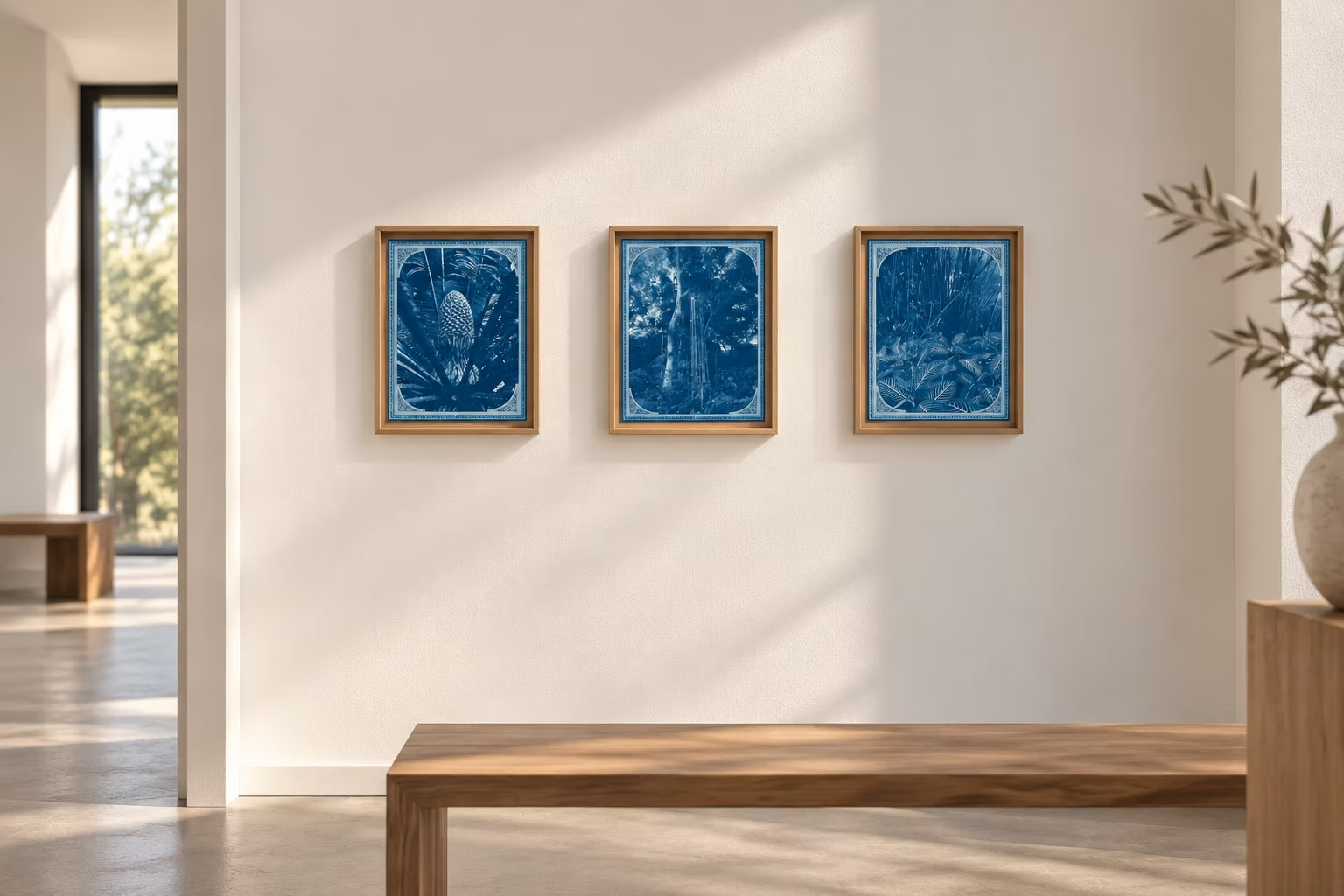
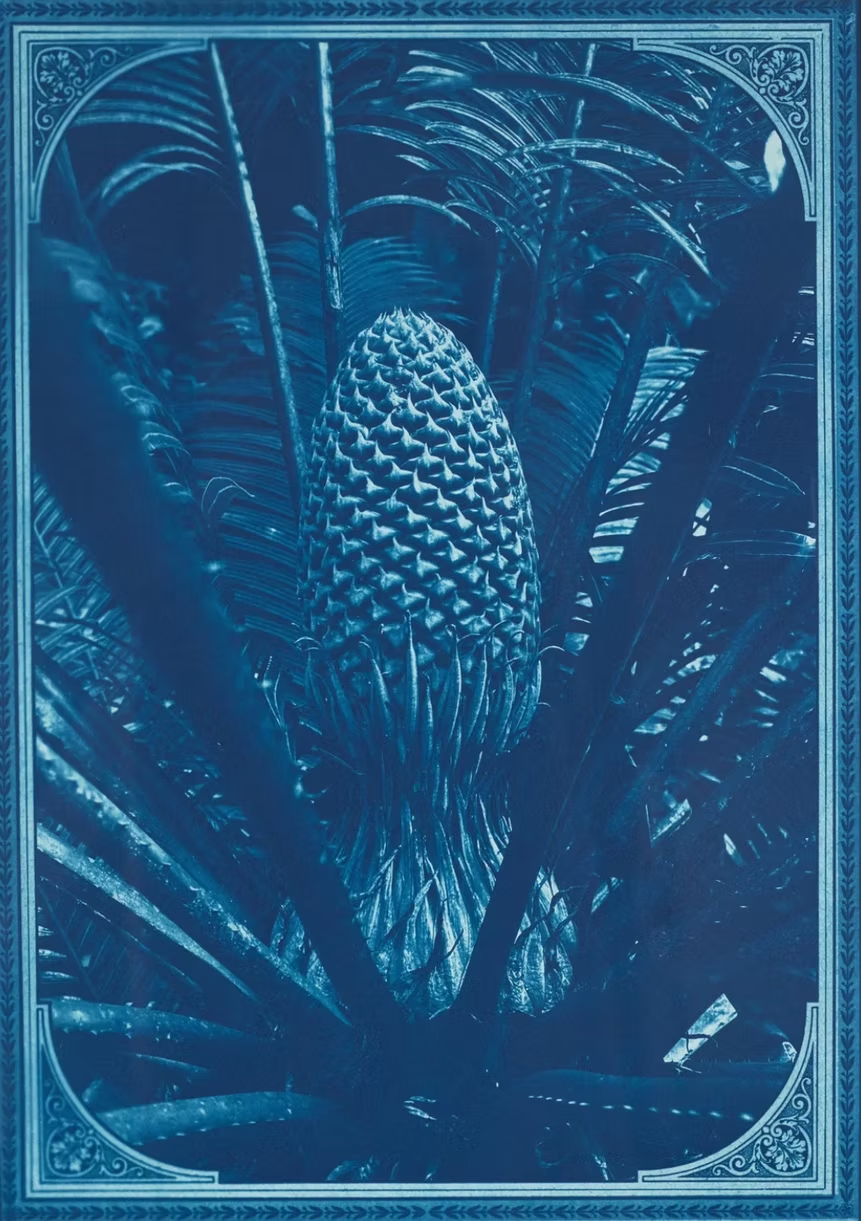
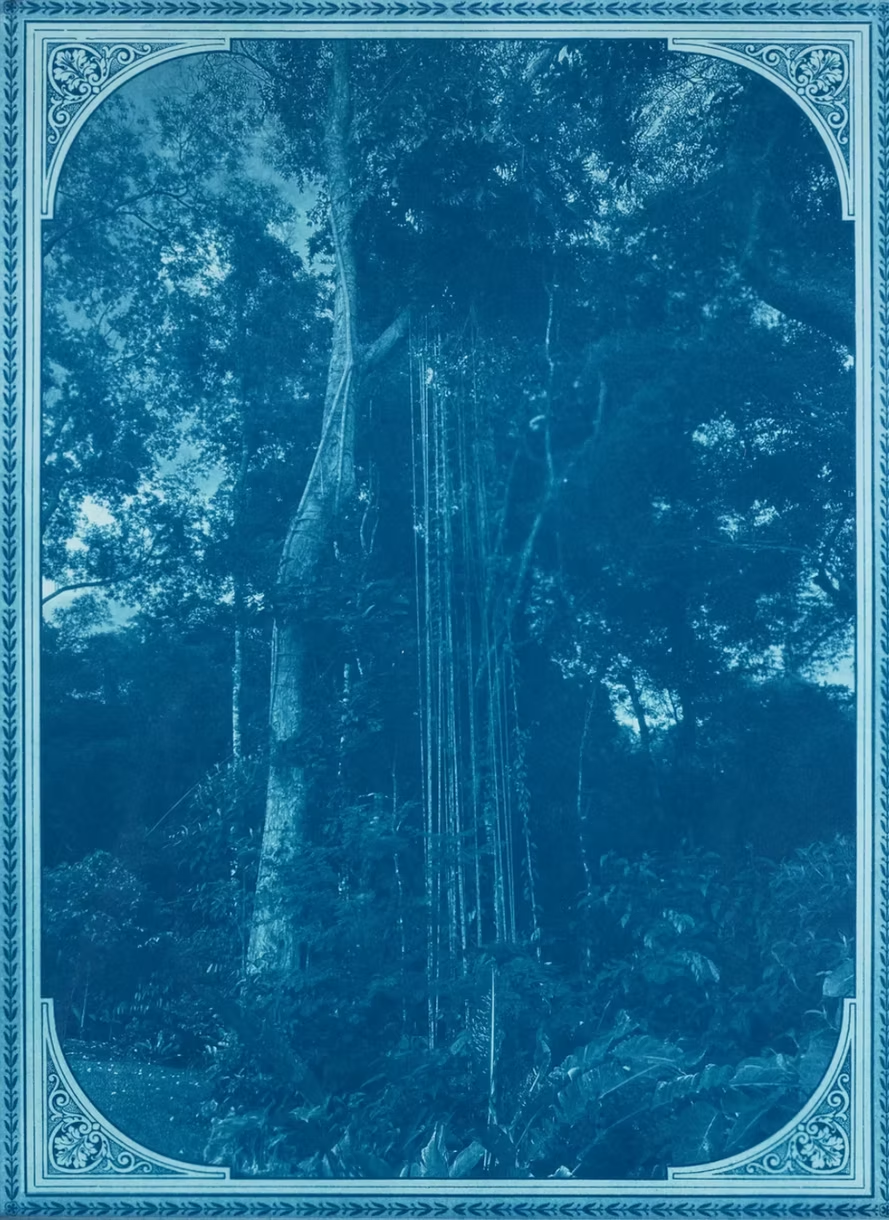
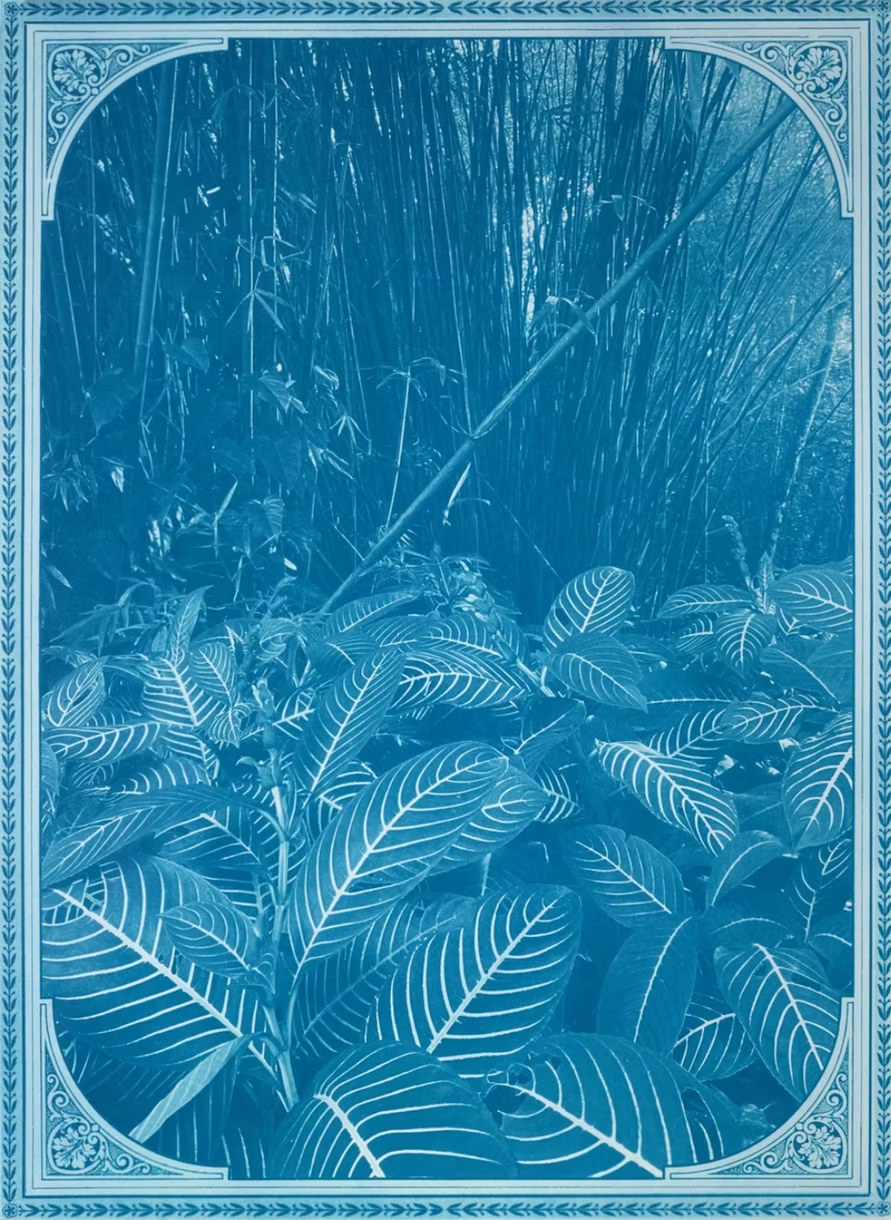
David Elia's cyanotypes presented at Espace Soardi in Nice, Um Portal Para a Mata Atlantica series.
David Elia: Between Nature, Art and Memory
Born in Rio de Janeiro in 1982, David Elia is a Brazilian and Portuguese artist whose practice moves between painting, photography, cyanotype, sculpture, objects and installation. With an educational background spanning fine arts, interior architecture and design, he approaches artistic creation through an open dialogue between disciplines, allowing the subject and its underlying research to determine the medium.
Brazil remains a central point of reference throughout his work. Its landscapes, botanical heritage and complex social and environmental histories inform an artistic language in which nature is never simply a visual subject. Forests and vegetation become ways of examining questions of territory, memory and transformation.
This perspective is particularly visible in his recent cyanotypes, where the Brazilian forest emerges through the distinctive deep blue of the photographic process. Trees, branches and foliage become almost architectural structures, shifting between recognisable landscapes and abstract compositions.
The technique itself has a long photographic history. Developed in the nineteenth century, cyanotype produces images through a photosensitive process activated by light, resulting in its characteristic Prussian blue. In Elia’s hands, however, it becomes more than a photographic method. It is a way of creating an imprint of a landscape, holding together its physical presence and the memory associated with it.
The resulting images invite a slower kind of looking. What initially appears as a representation of tropical vegetation gradually reveals layers of texture, light and composition. The forest becomes at once a real place, an artistic material and a reflection on what may disappear.
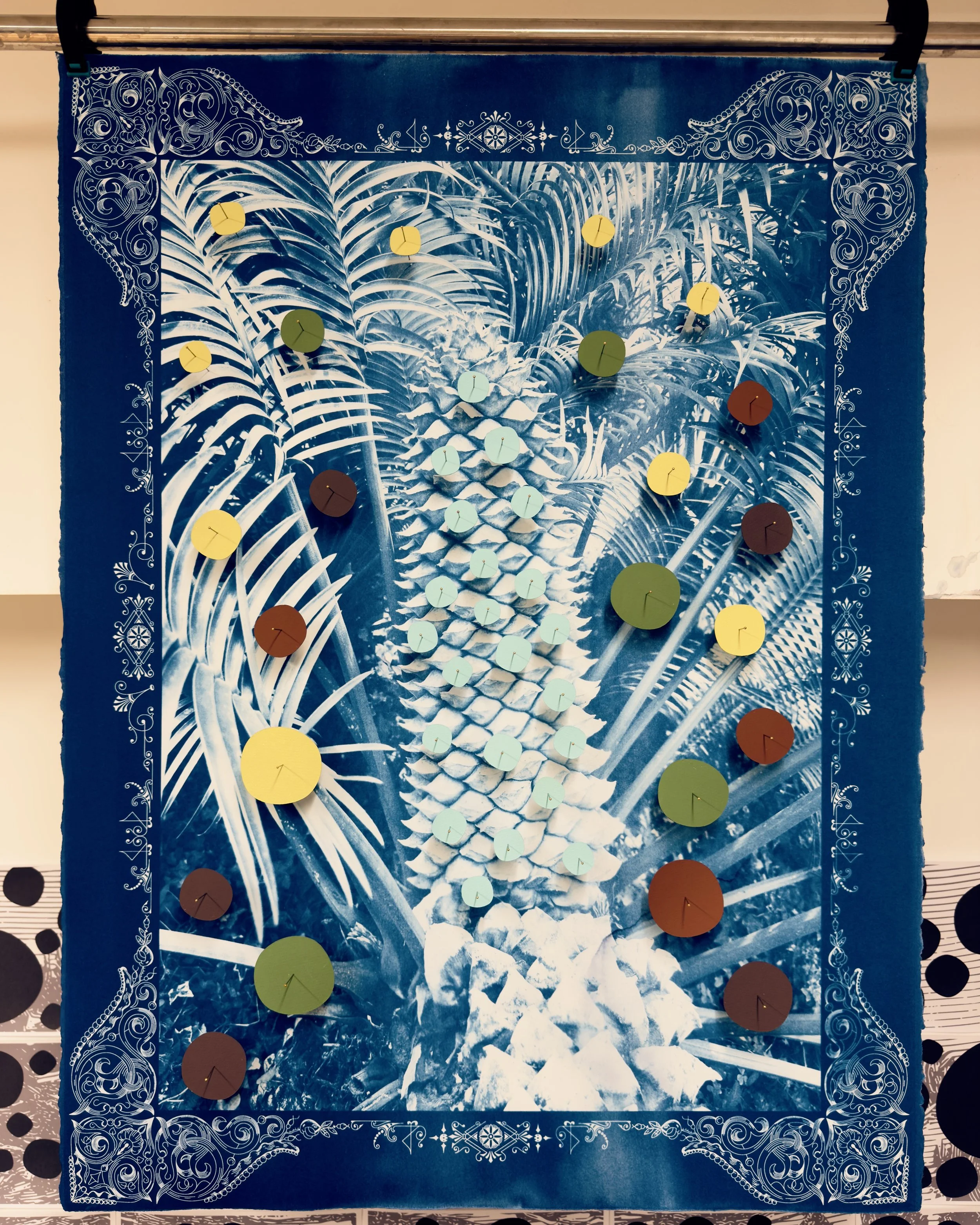
David Elia, Um Portal para os Açores: O Olhar de Werner , 2025, dimensions 76x57cm, (A Portal to the Azores: Werner’s Gaze). Garden of CC Caloura, São Miguel Island. Photo credit: David Elia Studio.
Espace Soardi: A Family Tradition Reconsidered
The presentation and preservation of artworks require a particular kind of knowledge, one that combines technical precision with sensitivity to artistic intention. This understanding lies at the heart of Espace Soardi.
Based in Nice on the French Riviera, Espace Soardi is a family-run framing workshop and art gallery founded in 2011 by brother and sister Géraldine and Benoît Soardi. Its roots, however, reach further back, to a family tradition of craftsmanship established in 1970.
Closely connected to the artistic heritage of Nice, including the creative environment surrounding the École de Nice, the Soardi family has developed a practice in which framing is understood as more than a technical service. Over the decades, it has become a way of engaging with artists, understanding their intentions and contributing to the way their works are presented and preserved.
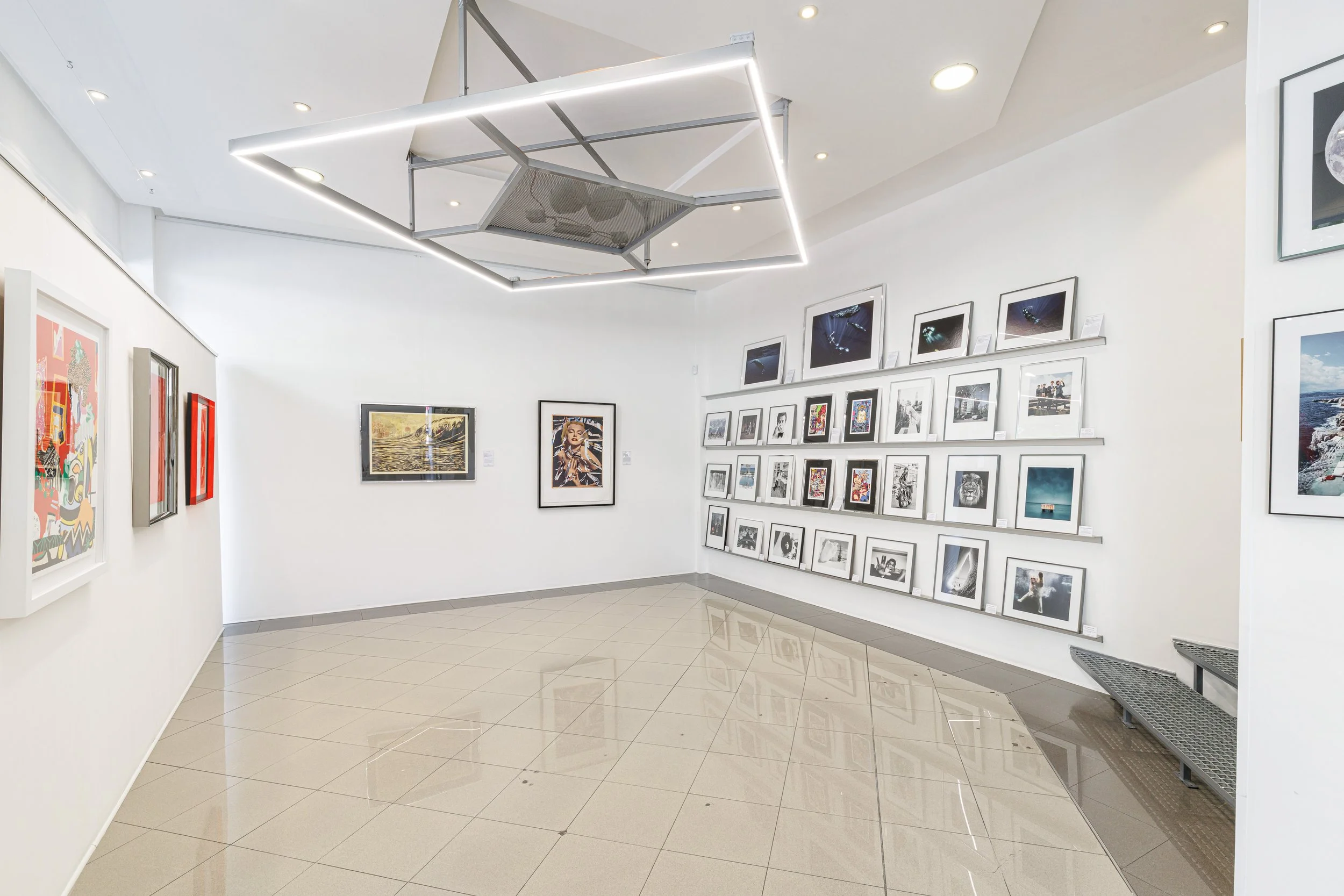
Espace Soardi showroom and gallery. Photo credit: Rafael Diaz
Today, Espace Soardi brings together a custom framing workshop, showroom and gallery. This combination creates a space where craftsmanship and contemporary artistic creation can inform one another, establishing relationships with artists, galleries, collectors, institutions, interior designers and private clients.
For Géraldine and Benoît Soardi, the frame should never compete with the artwork. Rather, it should respond to its particular qualities, revealing its character while respecting the artist's original intention.
Sometimes this calls for an almost invisible presentation. In other instances, the frame can introduce depth, contrast or an architectural dimension, becoming an integral part of the way the work is experienced.
The Frame as an Extension of the Artwork
Every framing project begins with an encounter with the artwork itself. Its materials, dimensions, technical characteristics and intended display environment all inform the decisions that follow.
At Espace Soardi, this process combines aesthetic considerations with the requirements of preventive conservation. The workshop works with a range of materials and finishes, from natural wood and hand-gilded frames to minimalist profiles, aluminium, acrylic and individually developed presentation systems.
Particular attention is given to the materials in direct contact with the artwork. Conservation boards, acid-free materials and reversible mounting techniques, where appropriate, help protect works while allowing for their future handling and preservation. Glazing is selected according to the nature of each piece, with anti-reflective and UV-protective options, as well as museum-grade acrylic and specialised protective systems.
This balance becomes especially important when working with photography, prints and other works on paper. The presentation must account not only for the visual relationship between the image and its frame, but also for the sensitivity of the material to light and its surrounding environment.
In the case of David Elia's cyanotypes, the relationship is particularly interesting. The characteristic blue is already a defining element of the image, and the framing must allow its tonal depth and delicate contrasts to remain visible. The choice of materials, the distance between the artwork and the glazing, and the treatment of the surrounding space all contribute to the final experience.
The frame, in this context, is not an afterthought. It becomes part of the conditions through which the artwork is encountered, protecting its material presence without diminishing its visual language.
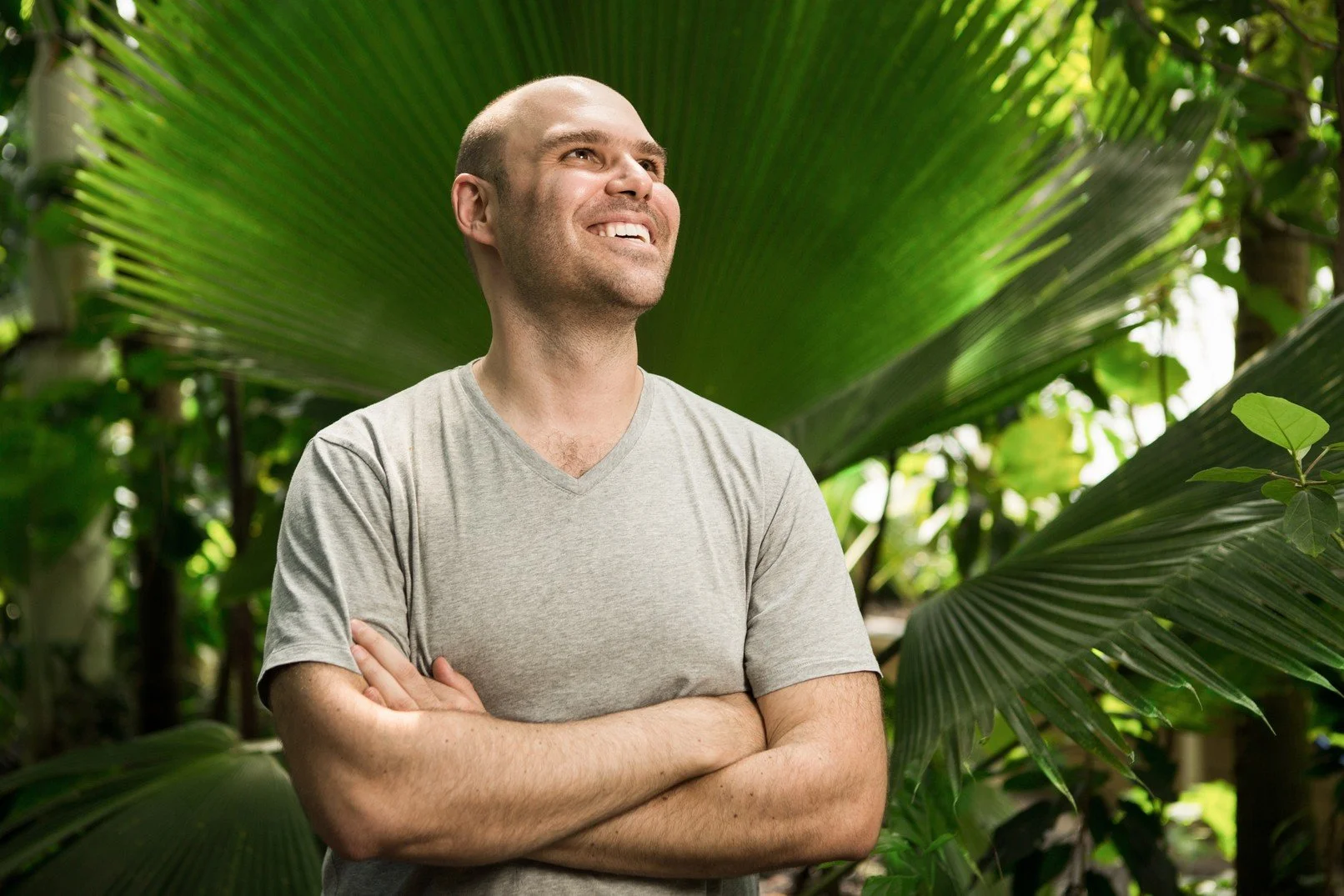
David Elia portrait. Photography: Mat Smith
Craftsmanship in Dialogue with Contemporary Practice
Although Espace Soardi's expertise is grounded in traditional craftsmanship, its approach continues to evolve alongside contemporary artistic practices.
Artists increasingly work with unconventional formats, experimental materials and surfaces that require specific technical solutions. Responding to these developments means remaining attentive to new materials, conservation methods and presentation possibilities while maintaining the precision of handmade work.
Each custom frame is carefully handcrafted in the workshop in Nice. At the same time, the team continues to explore innovations in technical glazing, materials and digital tools that allow clients to consider different frame combinations and finishes before fabrication.
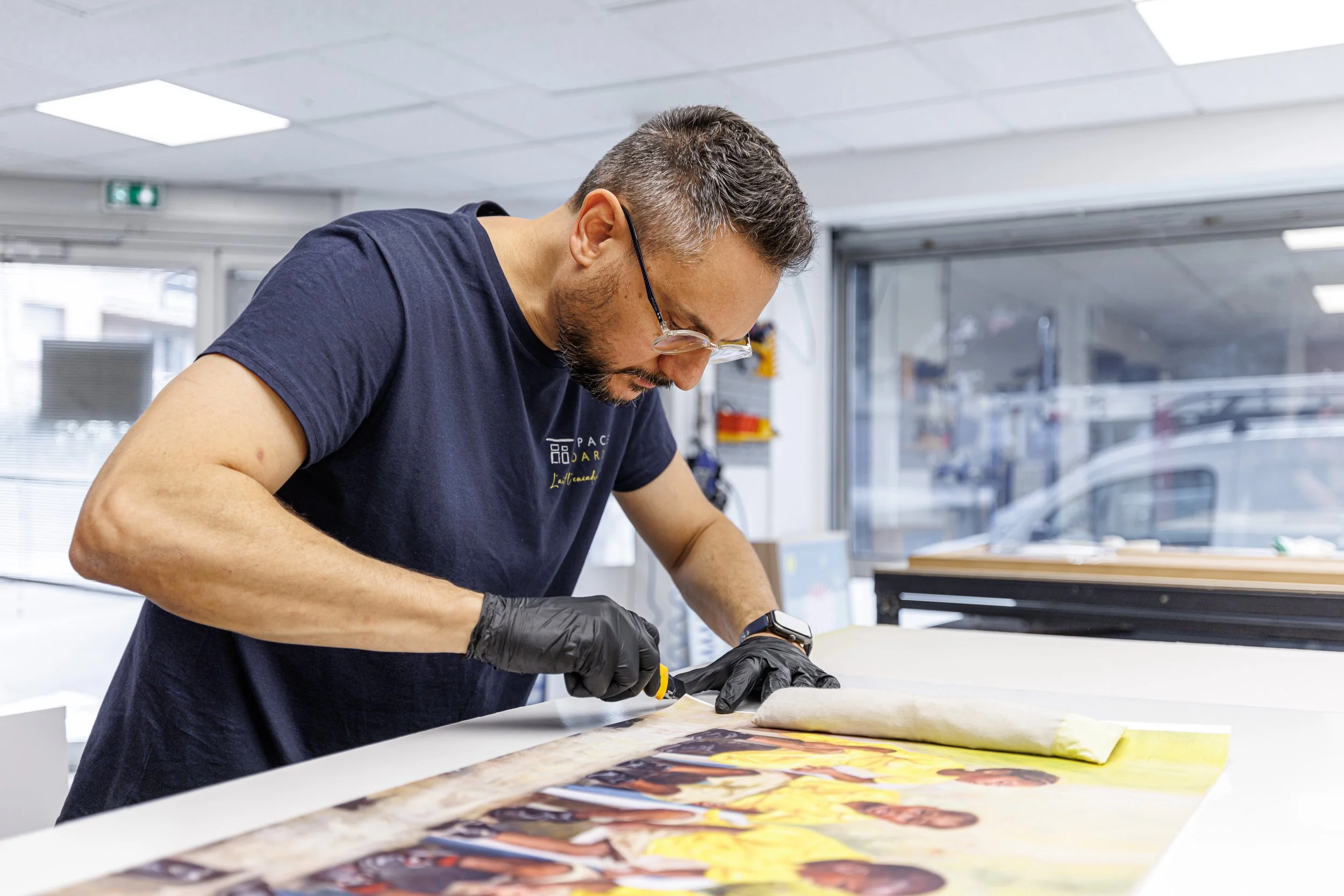
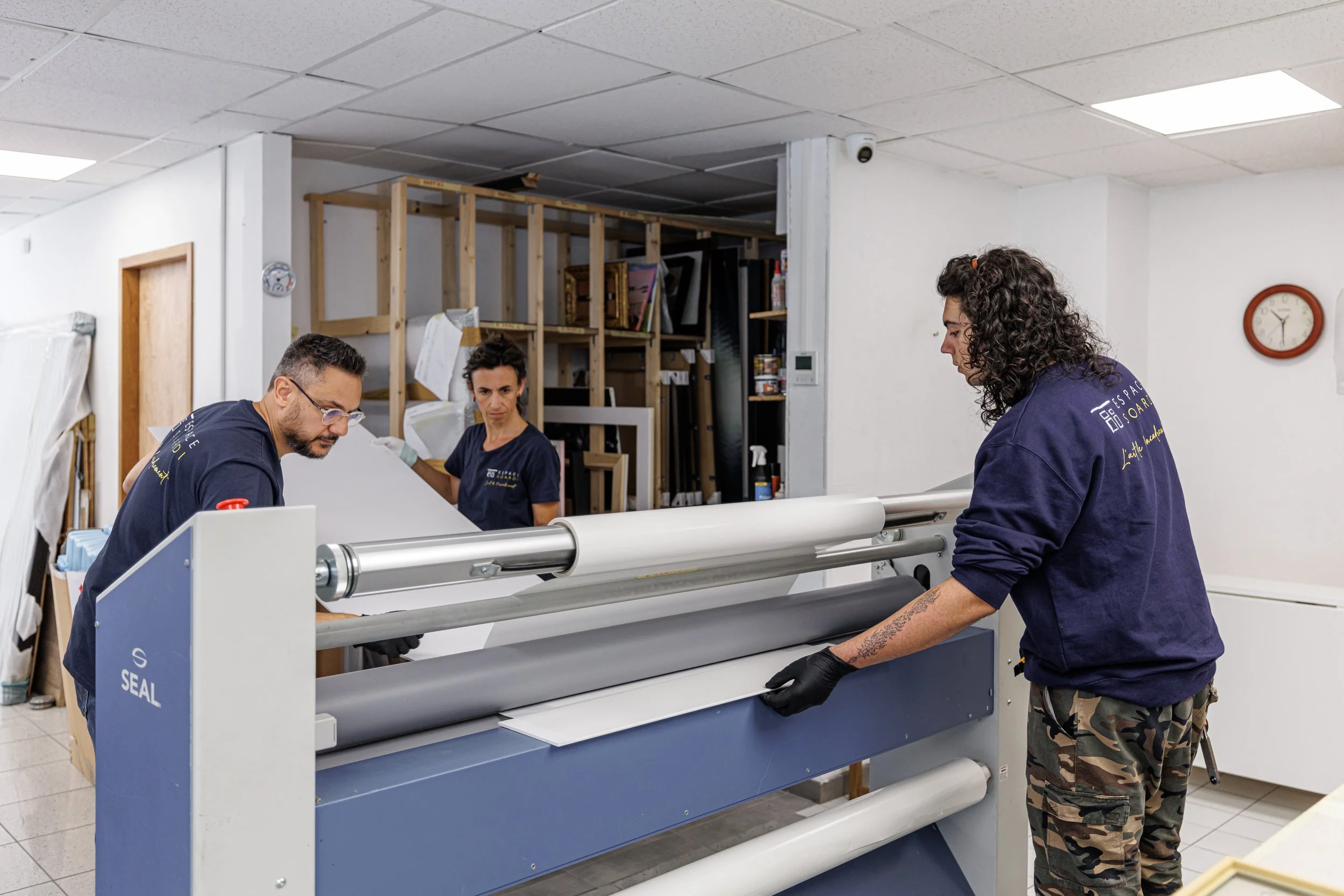
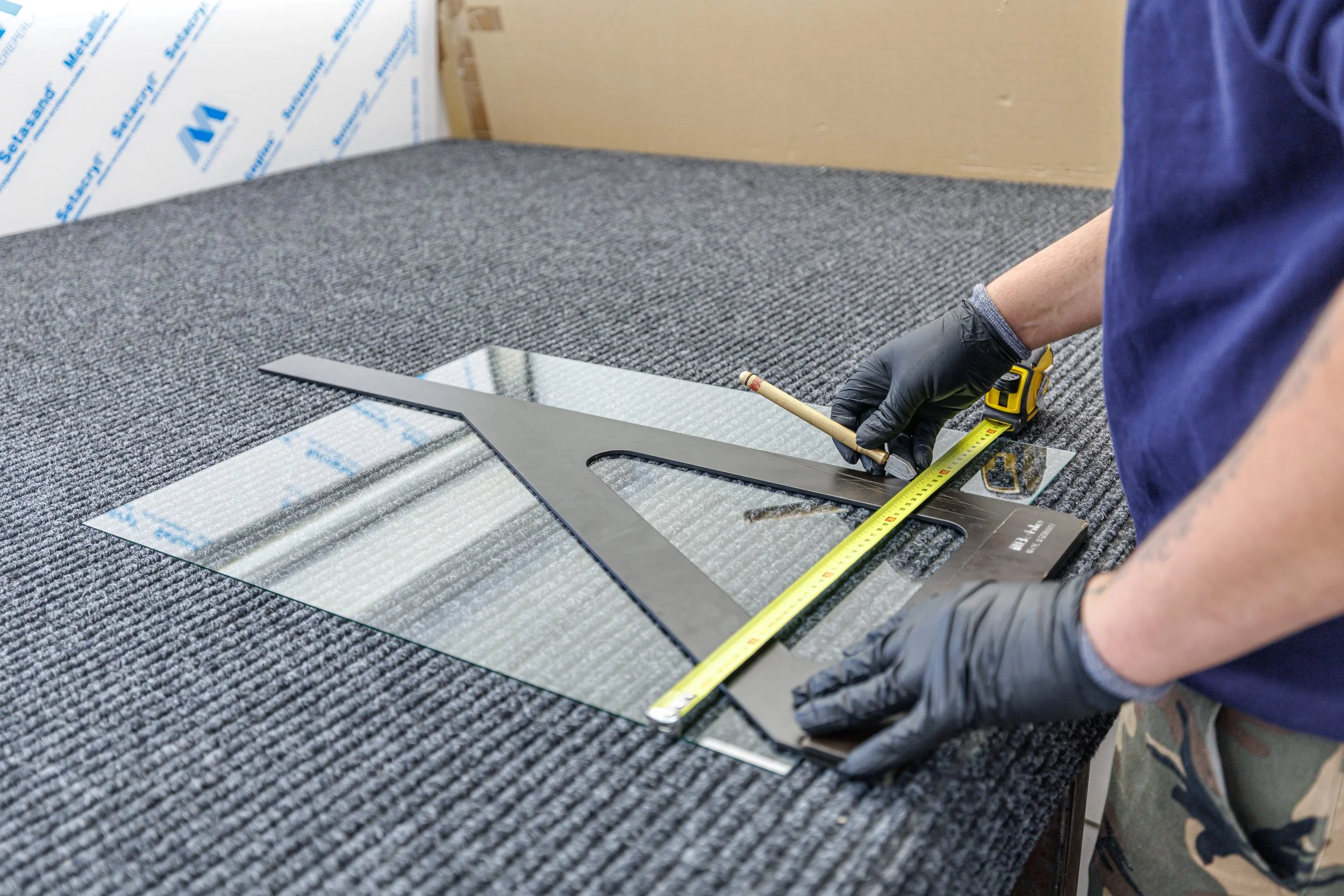
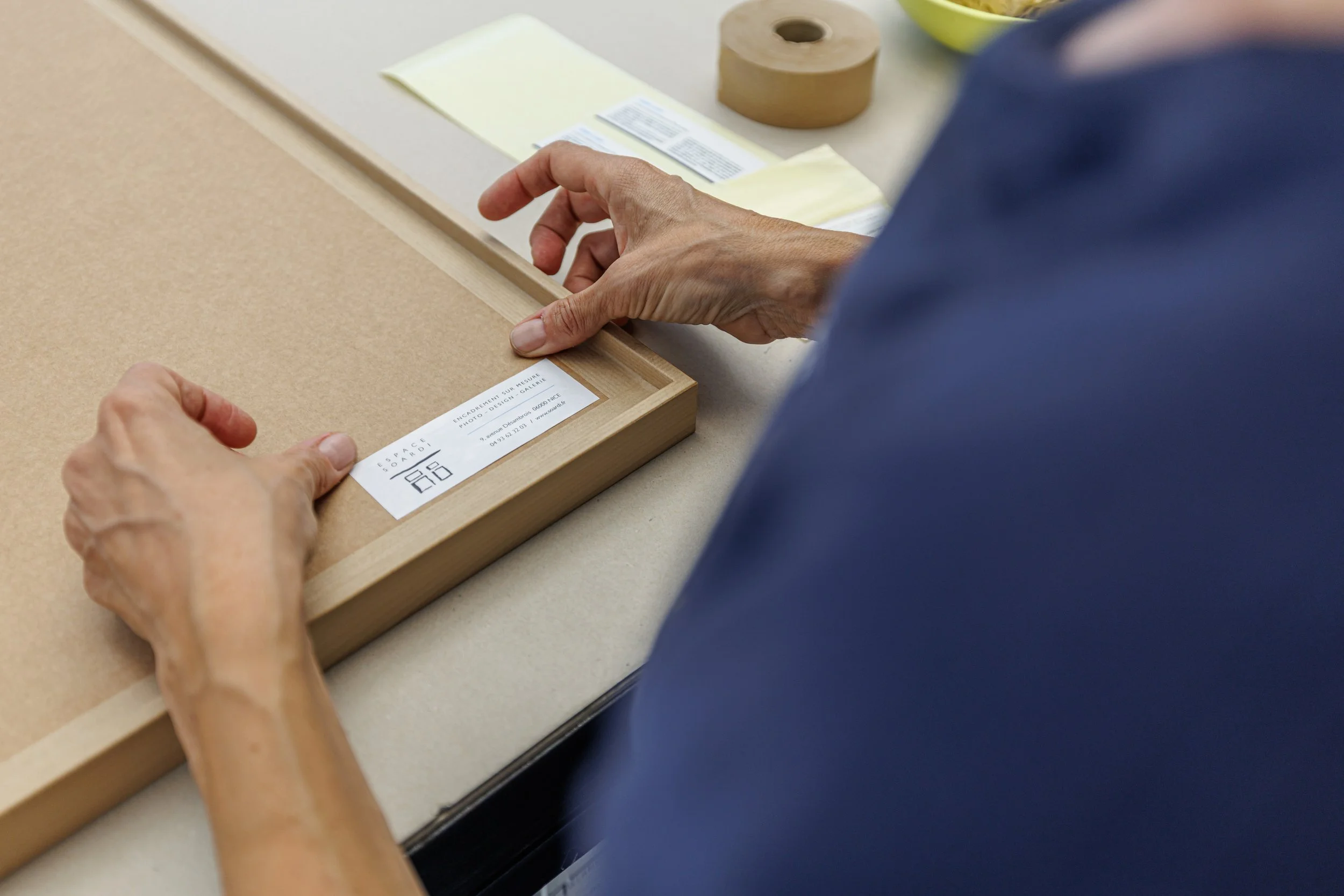
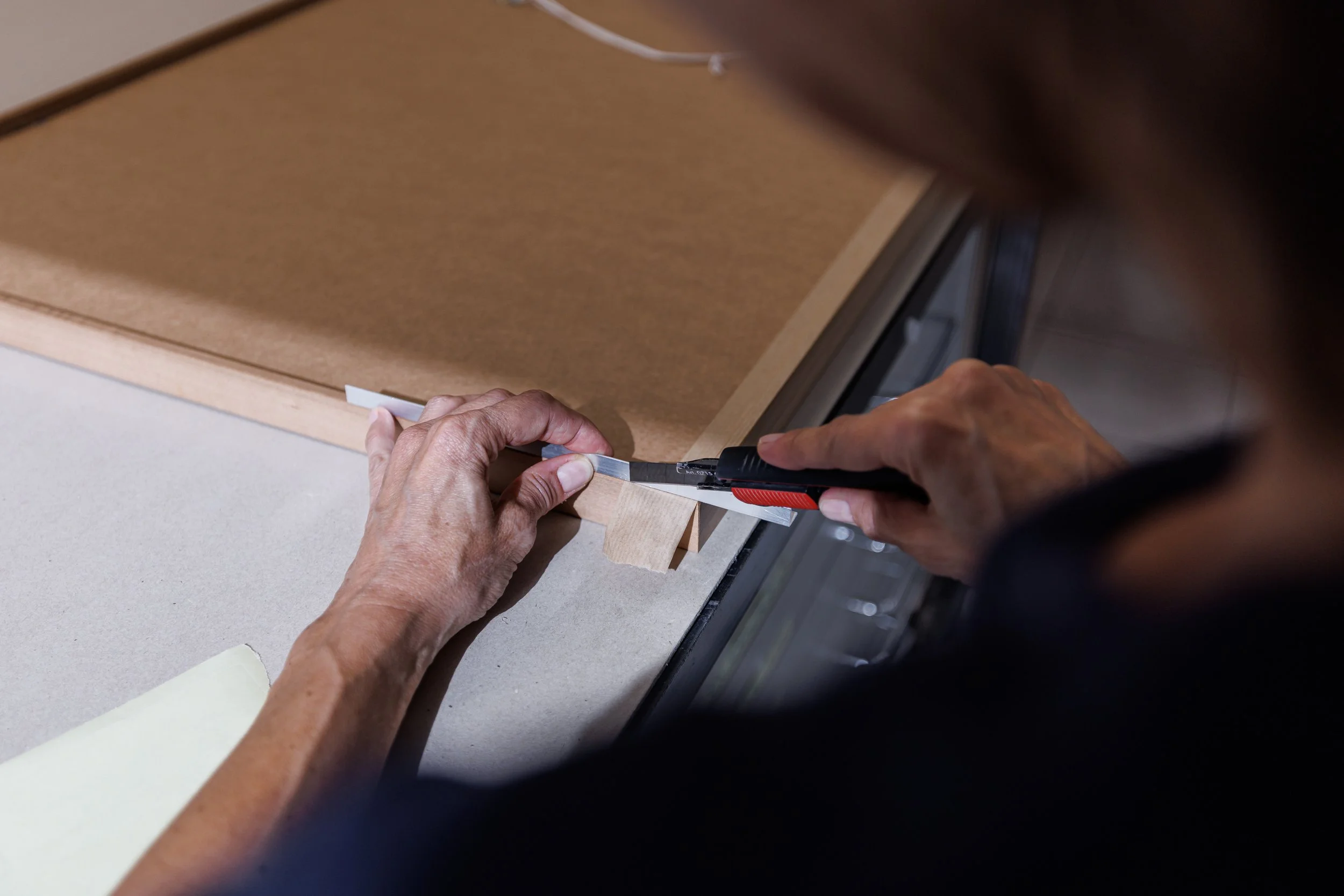
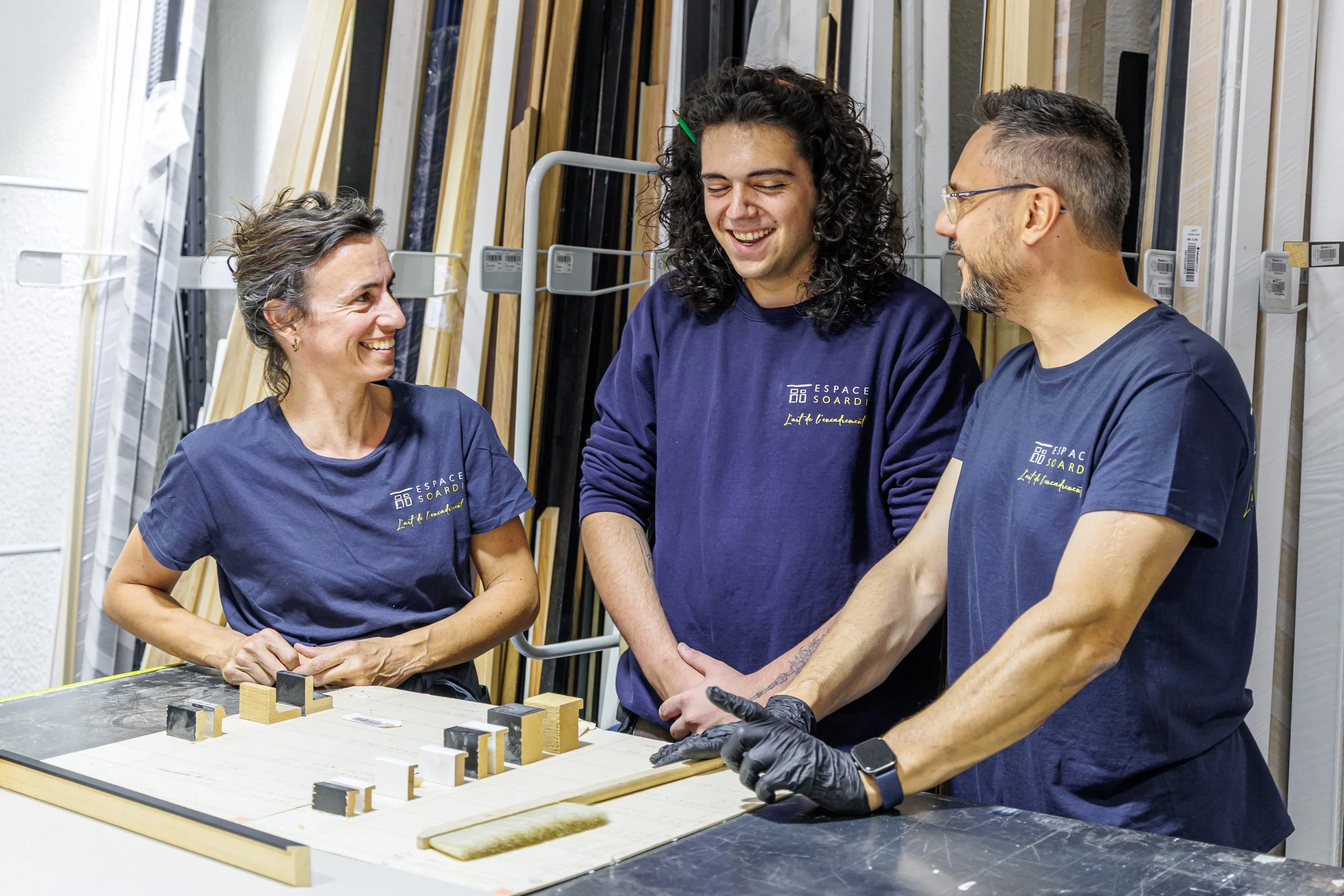
Espace Soardi framers working in workshop in Nice. Photo credit: Franck Menieri
For Espace Soardi, innovation does not replace craftsmanship. It expands its possibilities, allowing traditional knowledge to respond to the changing needs of contemporary art.
The gallery forms another part of this approach. Presenting a curated selection of artworks, including limited editions, photography and works by contemporary artists, it creates a direct connection with artistic production. The relationship between the workshop and gallery is therefore reciprocal: one considers how artworks are protected and presented, while the other provides a space for their exhibition and encounter.
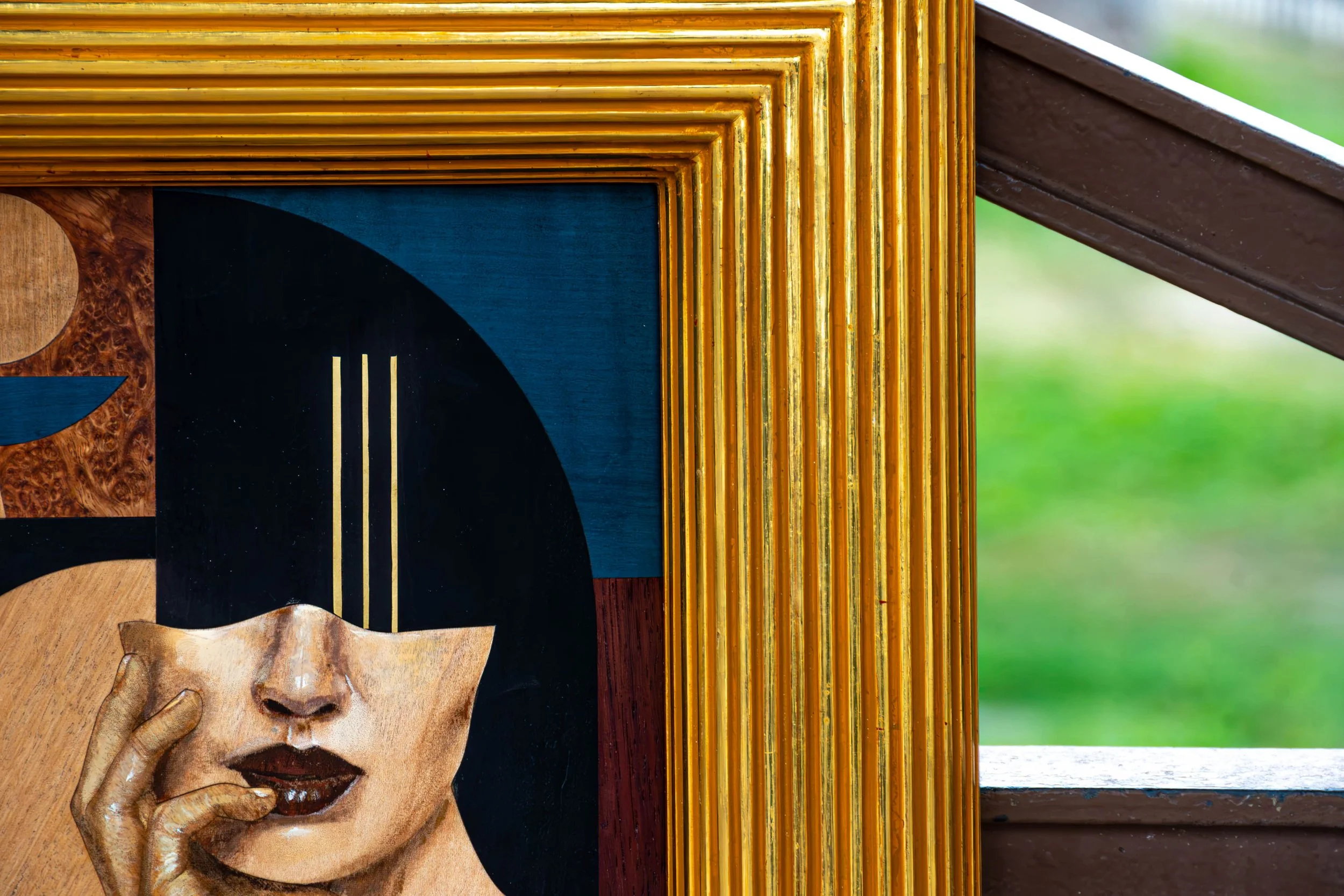
An artwork presented in one of Soardi’s custom-made frames. Photo credit: Rafael Diaz
A Shared Attention to the Life of an Artwork
The collaboration between David Elia and Espace Soardi brings these different perspectives into conversation. Elia's work explores the relationship between nature, history and memory, while the Soardi family's practice considers how an artwork can be presented and preserved without losing the qualities that make it distinctive.

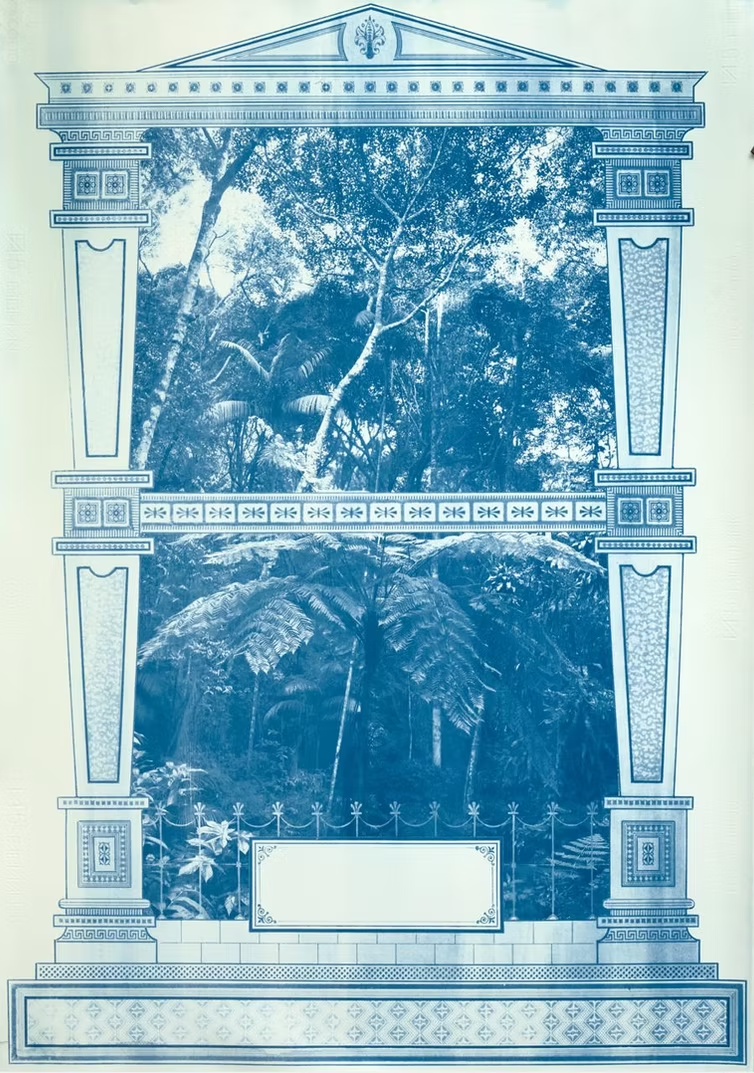
David Elia, “Um Portal para a Mata Atlantica / A Portal into the Mata Atlantica Rainforest”, 2022 , dimension 100x70cm. With frame: 110x80cm. Currently, four of David Elia's cyanotypes are presented at Espace Soardi in Nice, including works from the series Um Portal Para a Mata Atlantica and Um Portal Para o Alto da Boavista.
Their respective approaches meet in an attention to material, context and the passage of time. For an artist whose work often considers the fragility of natural environments and the traces left by transformation, the question of preservation carries an additional resonance.
Currently, four of David Elia's cyanotypes are presented at Espace Soardi in Nice, including works from the series Um Portal Para a Mata Atlantica and Um Portal Para o Alto da Boavista. The word portal suggests an opening or passage, an invitation to enter another space. Through the blue-toned images, the Brazilian forest appears suspended between photographic representation and memory.
The encounter between these works and Espace Soardi's expertise offers a broader reflection on the different forms of care involved in the life of an artwork. Artistic creation, framing, presentation and conservation are not necessarily separate stages, but interconnected practices that shape how a work continues to exist and be experienced.
Ultimately, the frame is not simply what surrounds an artwork. It is part of the conversation between the artist, the object, its environment and the viewer. And when this conversation is approached with both technical knowledge and artistic sensitivity, craftsmanship becomes an essential part of the artwork's journey.
Soardi about David Elia
David Elia’s works available at Soardi Space

Press contact:
Art Insider PR
press@artinsiderpr.com