
Flora Incognita Celebrating 15 Years of Espace_L
The Geneva based gallery Espace_L is celebrating fifteen years of curated exhibitions that brings Brazil and Europe together. Founded by Leticia Maciel in 2011, the gallery has become a meeting place for diverse voices on the contemporary art scene, shaped by her curatorial practice focused on the movement of cultures. Naturally, the celebration takes the form of an exhibition. Flora Incognita, opening September 17, 2026, brings together practices that do not need to be categorised in order to exist alongside one another. Like a wild garden, the exhibition grows through encounters. Created to take place during the Geneva Art Week and the Parcours Céramique Carougeois, ceramics and transformations form central threads within the exhibition with Marius Margot, Vivianne van Singer, Heberth Sobral, Vasilis Zografos and David Elia.
Flora Incognita is an exhibition bringing together the artists Marius Margot, Vivianne van Singer, Heberth Sobral, Vasilis Zografos and David Elia. Marking fifteen years of the gallery, the exhibition brings together distinct artistic practices exploring nature, transformation, memory and imagination.
For David Elia, whose practice sits at the intersection of art, science and cultural history, the exhibition offers a particularly resonant context. His work investigates plants and botanical archives alongside the histories of classification, industrialisation and colonial exchange, questioning how knowledge of the natural world has been constructed, circulated and remembered.
Founded in 2011 by Leticia Maciel, Espace_L has developed into a space for artistic exchange between Brazil and Europe. Born in Rio de Janeiro and based in Geneva, Maciel has shaped a curatorial practice around movement between cultures, bringing together artists from different geographical and cultural contexts. Over fifteen years, Espace_L has become a place where diverse artistic voices encounter one another and generate new forms of dialogue.
A Wild Garden
The title Flora Incognita evokes the unknown or yet-to-be-classified plant world. In the context of the exhibition, it becomes a metaphor for artistic practices that resist fixed categories and invite new ways of seeing.
At the heart of the exhibition is the idea of the Wild Garden — a space where diversity grows without rigid order or predetermined hierarchies. Rather than organising the artists according to a fixed taxonomy, Flora Incognita allows their practices to develop through proximity and encounter.
Diversity is not simply represented; it is cultivated.
The garden becomes both subject and structure: a place where different forms, materials, histories and perspectives coexist, overlap and transform one another.
David Elia: Plants, Archives and the Construction of Knowledge
David Elia investigates the intertwined histories of botany, science and cultural exchange through works that connect plants, landscapes and archival material. His practice draws on field research and historical systems of classification, exploring the ways botanical knowledge has been shaped by processes of exploration, collection and circulation.
Rather than approaching plants simply as natural subjects, Elia considers them within the cultural and historical systems that have surrounded them. Botanical archives become evidence of encounters between territories, institutions and people, while systems of classification reveal how the natural world has been ordered and understood.
This interest connects closely with the premise of Flora Incognita. The exhibition's reference to the unknown or unclassified plant world opens a space for questioning the categories through which nature has traditionally been described. Elia's work moves between scientific observation and artistic interpretation, revealing the botanical archive as a place where ecology, history and collective memory intersect.
His cyanotypes bring this research into a material and visual language. The photographic process, historically connected to botanical documentation, allows plant imagery to move between scientific record and poetic interpretation. In Elia's work, these images become part of a broader investigation into botanical exchange, industrialisation and colonial trade.
His recent research into Rio de Janeiro's urban forests, developed during the TAL Residency in 2026, further extends this ongoing investigation into the relationship between botanical environments, cultural histories and the city.
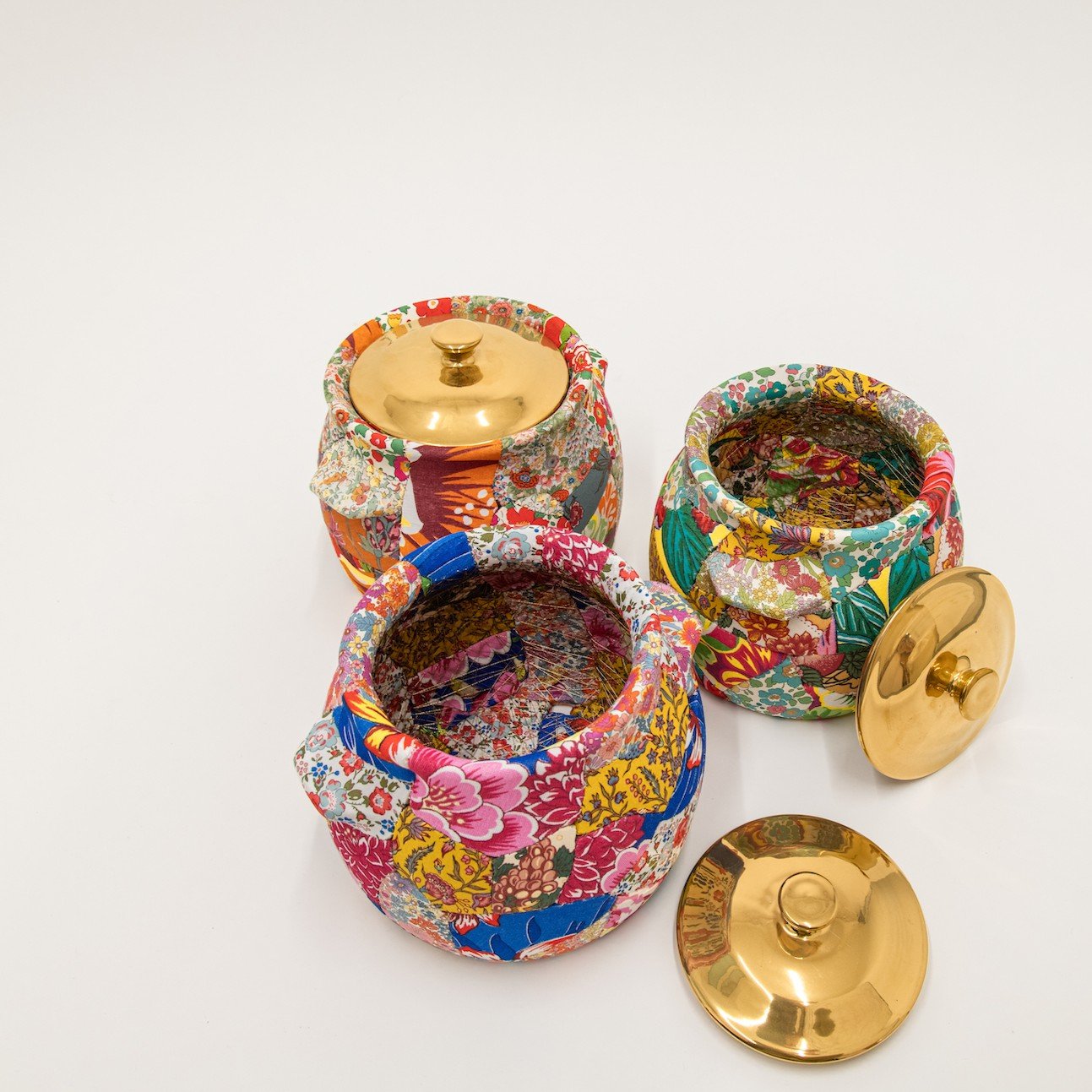
David Elia, Chita Hybrida Collection made in collaboration with Zoe Hillyard 2019. Fabric wrapped on Terracotta and sewn together with golden thread, gilding 25 x 20 cm incl. Lid. Image: Courtesy of the David Elia.
Earth, Fire and Transformation
Ceramics form another central thread throughout the exhibition. In the practices of Heberth Sobral, Vasilis Zografos and David Elia, clay becomes a material through which memory and transformation can be explored.
Shaped by earth and fire, ceramics echo the exhibition's broader reflections on encounter, migration and continual reinvention. In Elia's practice, this material dimension complements his engagement with botanical and archival research, bringing historical questions into a tactile and physical realm.
Together, the ceramic works and Elia's cyanotypes create a dialogue between natural processes and systems of knowledge — between what is collected, classified and preserved and what continues to evolve.
Imagined Ecologies
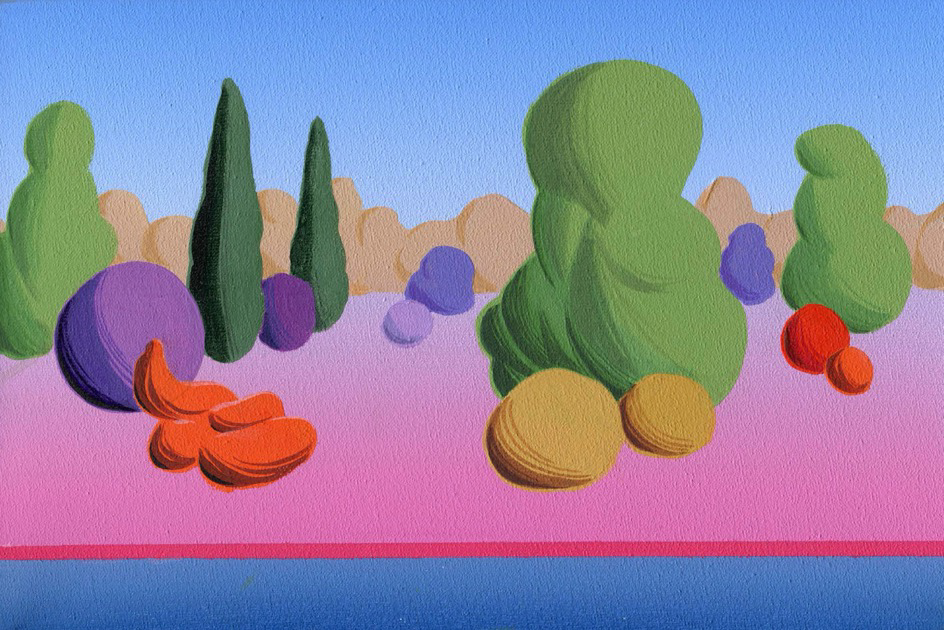
Marius Margot approaches the vegetal world through his paintings. His paintings introduce recurring plant-like forms inspired by the visual language of video games, creating fictional organisms that inhabit speculative ecosystems.
In Margot's imagined worlds, the organic and digital converge. His plants are neither botanical specimens nor representations of existing species, but unfamiliar forms of life that remain open to interpretation. His practice resonates with the exhibition's central idea of Flora Incognita: a vegetal world that is mutable, unclassified and continually reinvented through the encounter between digital and physical worlds.
Marius Margot - Surface 20, 2026. Acrylic on canvas 20 x 30cm. Image: Courtesy of the artists and Espace_L.
Colour as a Living Language
For Vivianne van Singer, transformation begins with perception itself.
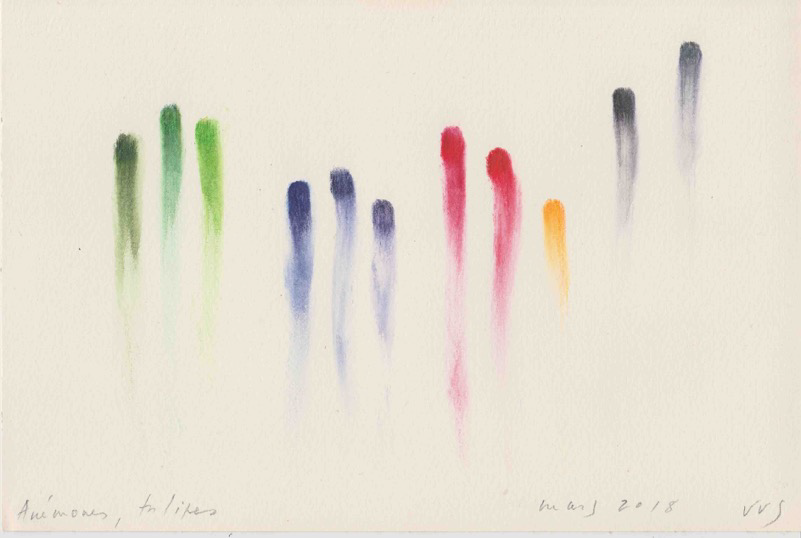
Her practice explores the expressive potential of colour across real, imaginary and symbolic territories. Strongly influenced by Arte Povera, with Luciano Fabro as a major reference, she interprets her environment through her research into colour, using simple materials to reinterpret what she observes around her.
Subtle chromatic relationships, transparency and light create shifting visual environments in which colour becomes more than a formal element. It becomes a dynamic field capable of altering the viewer's perception and revealing unexpected connections between objects, spaces and memories.
Vivianne Van Singer - Du bout des doigts Bouquets et jardins, 2016-2018 Dessins, crayons de couleur, papier aquarelle 29,7x21 cm. Image: Courtesy of the artists and Espace_L.
Material, Memory and Cultural HistoriesMaterial, Memory and Cultural Histories
The work of Heberth Sobral brings together ceramics, painting and everyday objects to construct exuberant visual worlds in which nature and imagination intertwine.
His practice is rooted in an interest in everyday behaviours, memories and social and cultural histories. Familiar objects are transformed into artistic forms, creating works that invite viewers to connect their own memories with those embedded within the materials.
Playmobil figures merge with hybrid landscapes, while ceramics and painting create fluid ecosystems in which material, image and symbolism coexist. Drawing on Afro-Brazilian visual culture, Sobral's works resist fixed representations of nature, instead presenting it as something continually changing.
His experimental approach to everyday objects and materials also recalls the participatory and material-driven spirit of the Neo-Concrete movement.
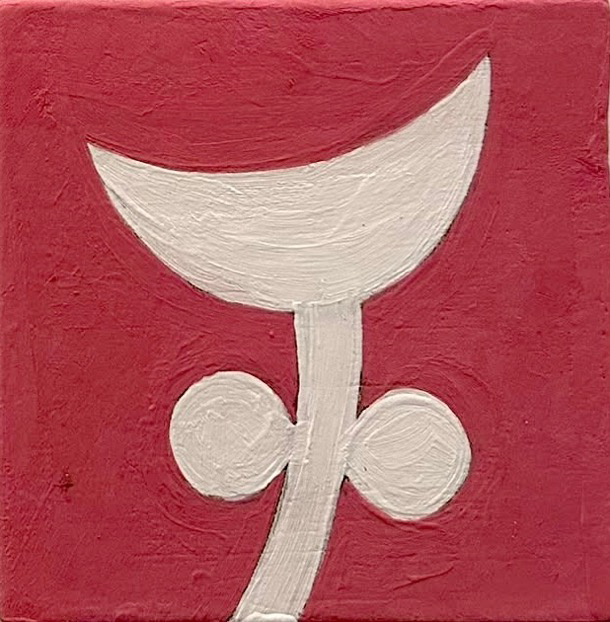
Heberth Sobral, Untitled 2025 ceramic assemblage 10x10 cm. Image: Courtesy of the artists and Espace_L.
Landscape, Archaeology and Reconstruction
Working across painting and ceramic assemblage, Vasilis Zografos explores the intersections of landscape, archaeology and cultural memory.
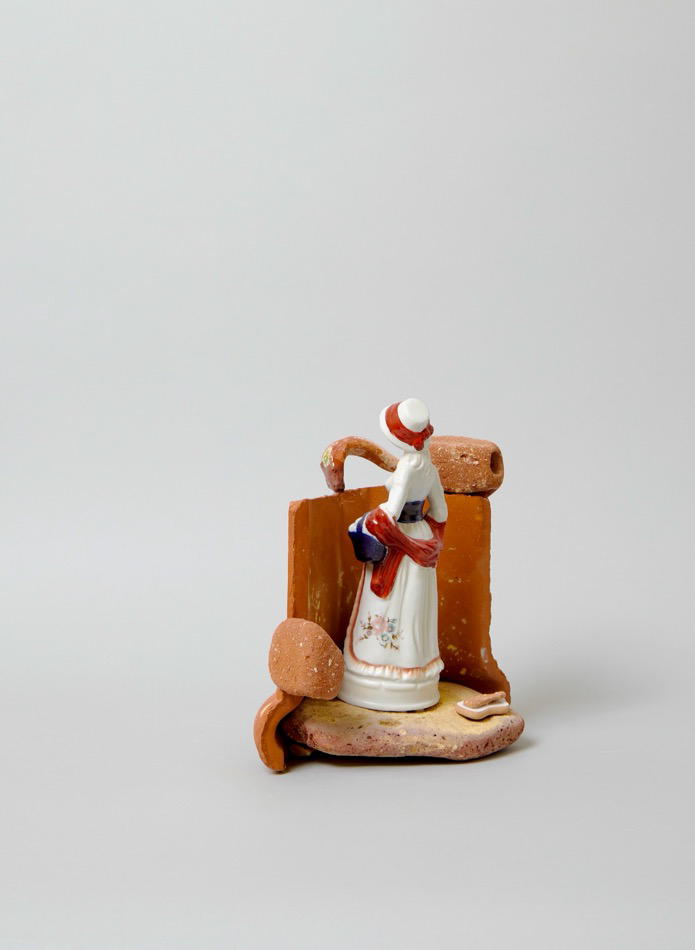
His paintings evoke imagined landscapes where natural forms and cultural traces coexist, while his assemblages combine ceramic fragments, porcelain figurines and found materials into new visual constellations.
Zografos brings together cultural replicas and accidental finds shaped by nature, creating a dialogue between different forms of archive. Through layering, displacement and reconstruction, familiar objects acquire new meanings.
Memory therefore becomes an active process rather than a fixed record, an ecosystem that is continually reconstructed.
Vasilis Zografos - Untitled. 2025. Assembly 15 x 10 x 5 cm. Image: Courtesy of the artists and Espace_L.
Five Practices, One Garden
Bringing together artists working across ceramics, painting, drawing, cyanotype and assemblage, Flora Incognita does not attempt to define a single relationship between art and nature.
Instead, the exhibition creates a space for different approaches to coexist.
Plants become archives, fictional organisms, memories, colours and imagined landscapes. Clay becomes a material of transformation. Everyday objects become carriers of cultural histories. And the garden becomes a metaphor for a curatorial approach based on openness rather than classification.
Within this landscape, David Elia's research-driven practice provides a particularly strong connection between the natural world and the histories through which it has been understood. His engagement with botanical archives and systems of classification expands the exhibition's central question: what remains unknown when the structures we use to understand nature are themselves shaped by history?
Ultimately, Flora Incognita proposes Espace_L itself as a wild garden , a place where artistic practices rooted in different histories, geographies and sensibilities can grow alongside one another without hierarchy.
Celebrating fifteen years of Espace_L, the exhibition reaffirms Leticia Maciel's curatorial vision and the gallery's commitment to artistic exchange between Brazil, Europe and beyond. Like a garden, the exhibition remains open-ended: a place where encounters take root, established categories can be reconsidered, and new forms of connection continue to emerge.
Exhibition Information
Flora Incognita
Espace_L
23, rue des Bains
1205 Geneva, Switzerland
Opening: September 17, 2026
Exhibition: September 18 – October 24, 2026
Opening hours: Tuesday–Saturday, 11 AM–6 PM, and by appointment
Artists:
David Elia
Marius Margot
Vivianne van Singer
Heberth Sobral
Vasilis Zografos